
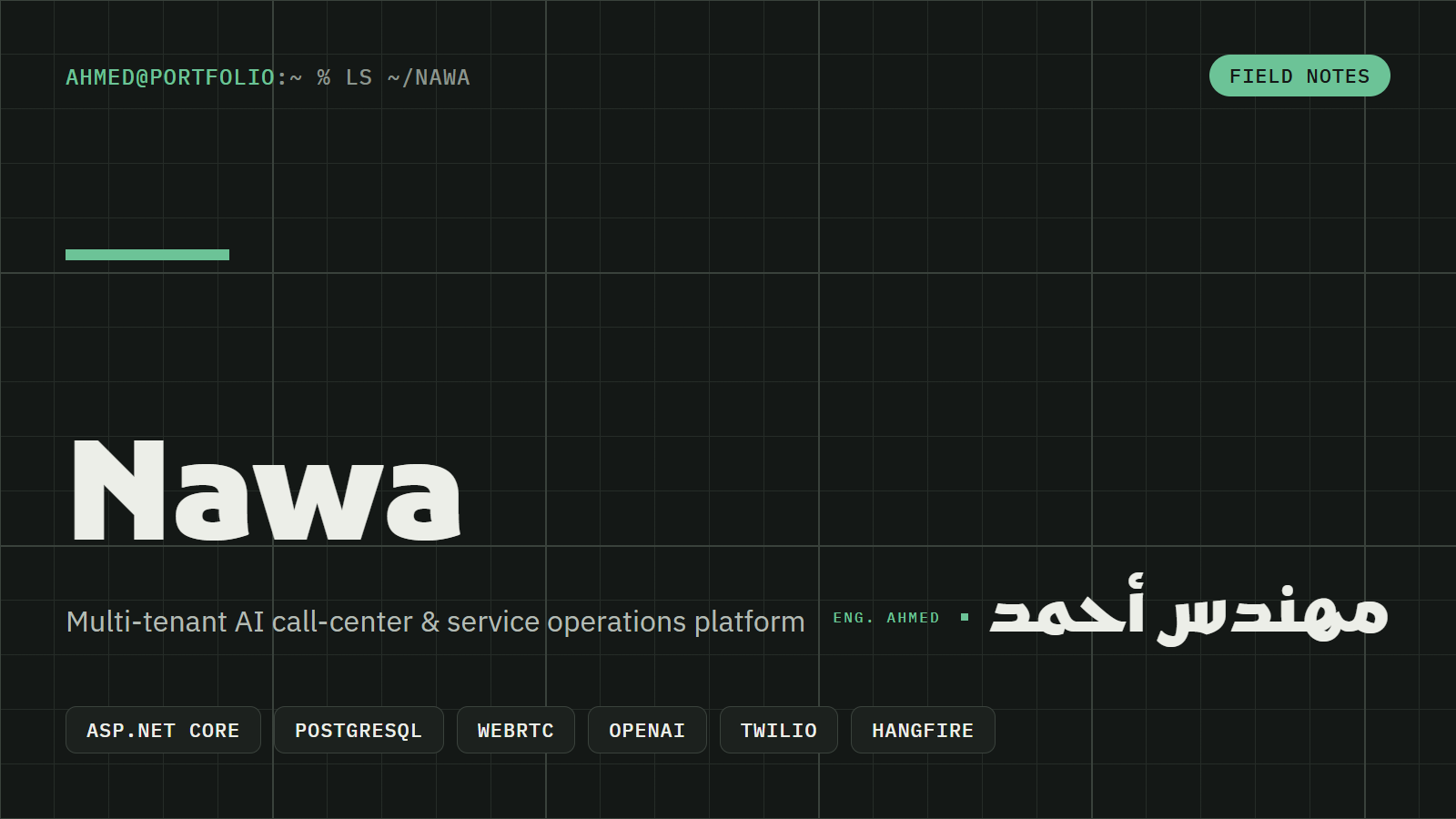
Nawa
Nawa is a multi-tenant AI call-center and service-operations platform: callers reach it over the phone (Twilio) or in-browser (WebRTC), and an AI agent handles the conversation, with tool orchestration, billing, and tenant isolation underneath. A production-grade AI operations layer.
Deliverables
Layered ASP.NET Core (.NET 8) API
PostgreSQL
Realtime voice & chat (WebRTC, WebSockets)
Policy-driven tool orchestration
Billing & usage metering
Year
2025
Project Role
Backend Developer
The problem
A call-center platform serving multiple tenants needs every conversation, tool call, and invoice scoped to the right tenant, with no leakage between them.
Callers arrive two different ways, PSTN through Twilio and browser-based WebRTC, and both need to reach the same AI conversation pipeline.
An AI agent that can take real actions needs those actions gated by policy and logged, since a bad tool call has real consequences for a tenant's operations.
Usage has to be metered accurately enough to drive billing: pricing logic, top-ups, billing cycles, and invoice lifecycle, not just logged for observability.
Role & responsibilities
API architecture across a layered Domain / Application / Infrastructure / API structure in ASP.NET Core.
JWT and API-key security with tenant-aware authorization and middleware policy enforcement.
Real-time interaction flows: chat, speech-to-text, text-to-speech, WebRTC SDP exchange, and WebSocket-based telephony bridging with OpenAI and Twilio.
Policy-driven tool orchestration, webhook outbox/retry, and Hangfire background jobs for auditable external actions.
Billing and monetization: usage metering, pricing logic, top-up/payment flows, billing cycles, invoice lifecycle.
Two call paths, one pipeline
PSTN callers via Twilio and browser callers via WebRTC needed to reach the same AI conversation logic without two divergent implementations. WebRTC SDP exchange and WebSocket-based telephony bridging act as two entry points feeding the same speech-to-text / AI / text-to-speech pipeline, so one conversation implementation serves both caller types.
Letting an AI agent take real actions safely
Tool calls triggered by the AI agent have real side effects on tenant systems, so they can't be executed blindly. Policy-driven tool orchestration gates which tools an agent can invoke, with webhook outbox/retry and Hangfire jobs making external actions auditable and retry-safe.
Metering usage precisely enough to bill
Usage metering and pricing logic are first-class parts of the domain, feeding top-up/payment flows, billing cycles, and invoice lifecycle controls: a billing layer driven by real usage data rather than approximated after the fact.
Outcome
A production-grade AI operations layer that connects real-time voice and chat to billable, tenant-aware infrastructure, handling both traditional telephony and browser-based calling behind one conversation pipeline.
What I learned
Bridging two caller protocols into one pipeline is more work upfront than treating them separately, but it means the AI logic only has to be built once.
Billing logic belongs in the domain model from day one on a metered platform: retrofitting usage metering onto an existing conversation flow is much harder than designing for it.
Selected Work
Work
that shipped
to production.
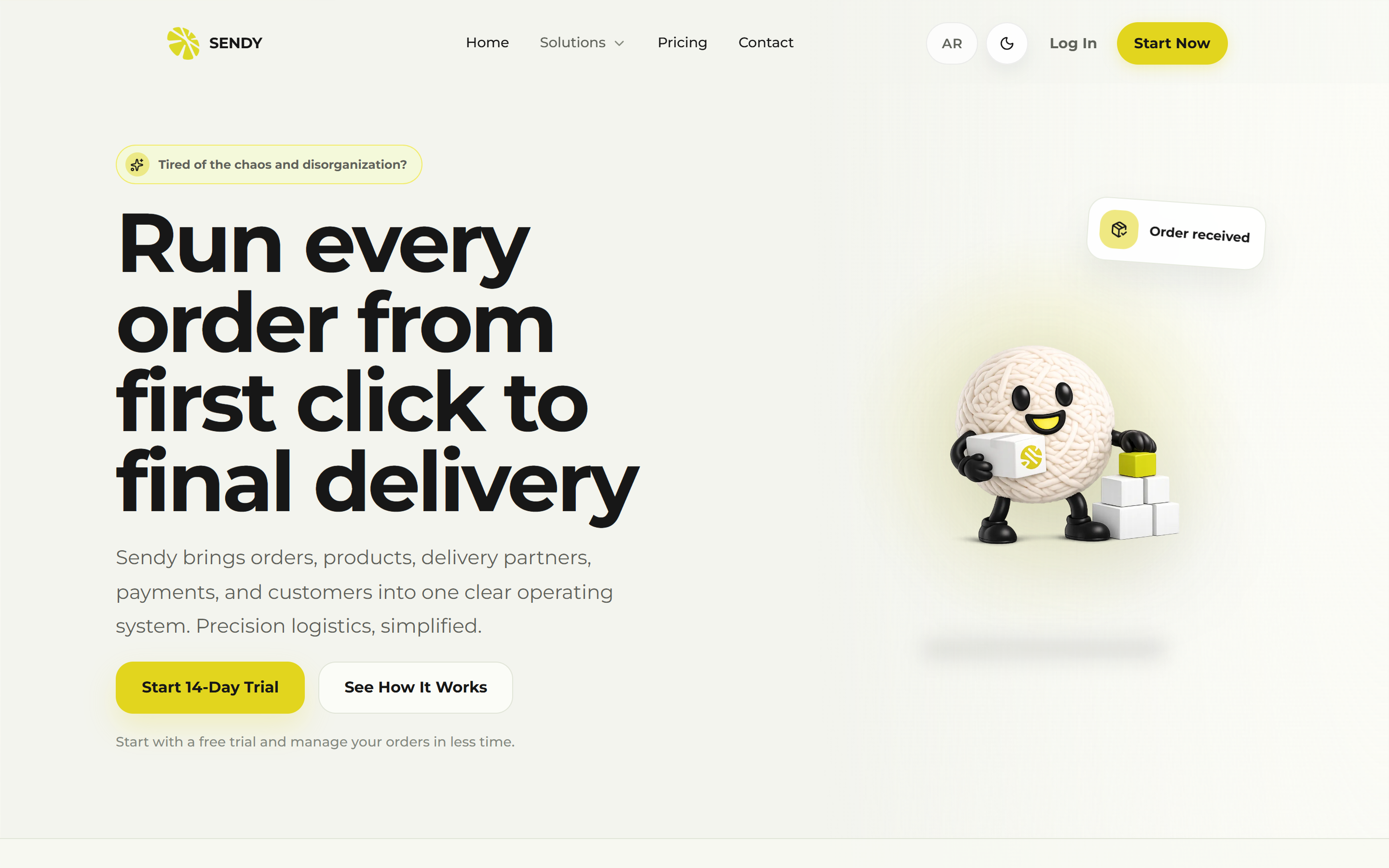
Sendy
Multi-tenant delivery and e-commerce operations platform: one ASP.NET Core API, five React frontends, real-time tracking and AI-powered store tooling.
Web Platform • Logistics & E-Commerce • 2026
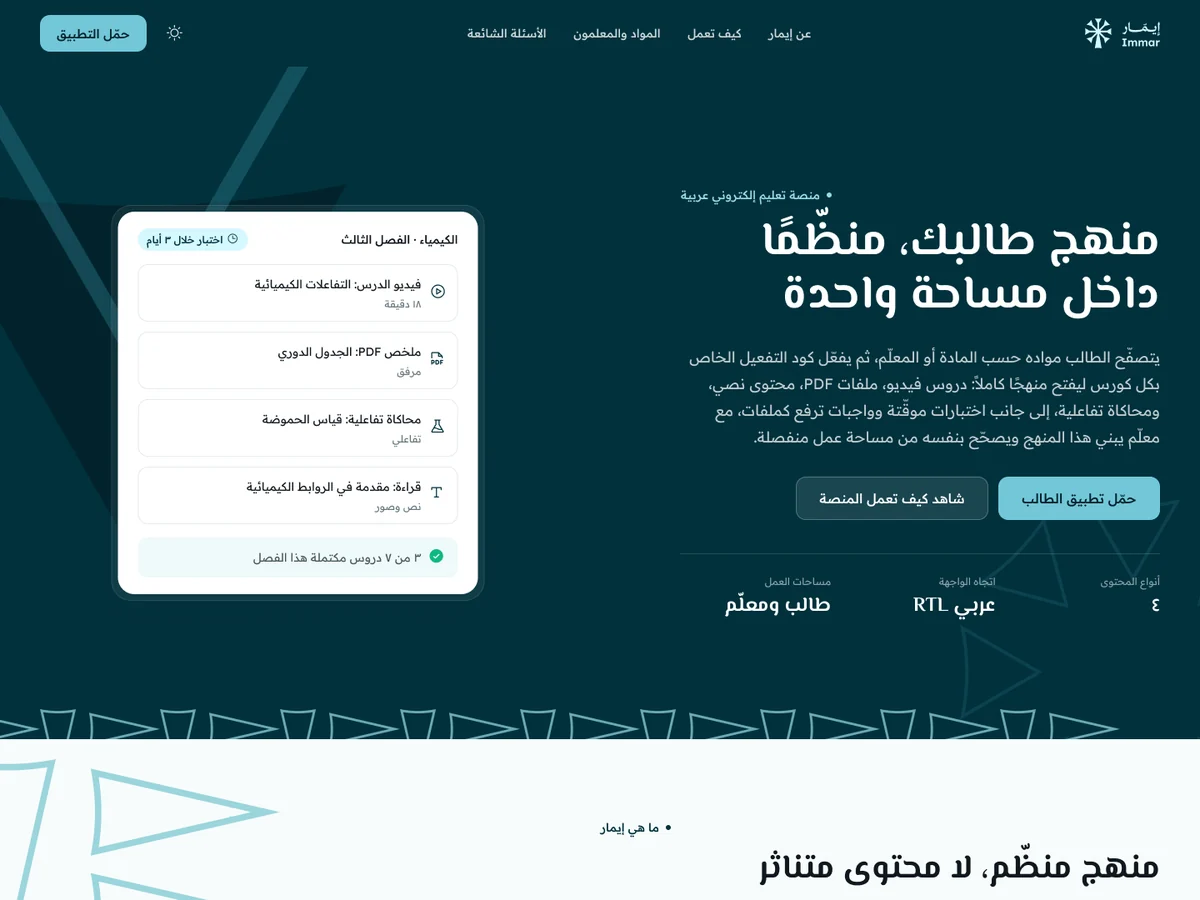
IMMAR
Multi-teacher e-learning platform for Iraq: one ASP.NET Core API, a React dashboard and a Flutter student app, with protected video, exams and settlements.
E-Learning Platform • Education • 2026
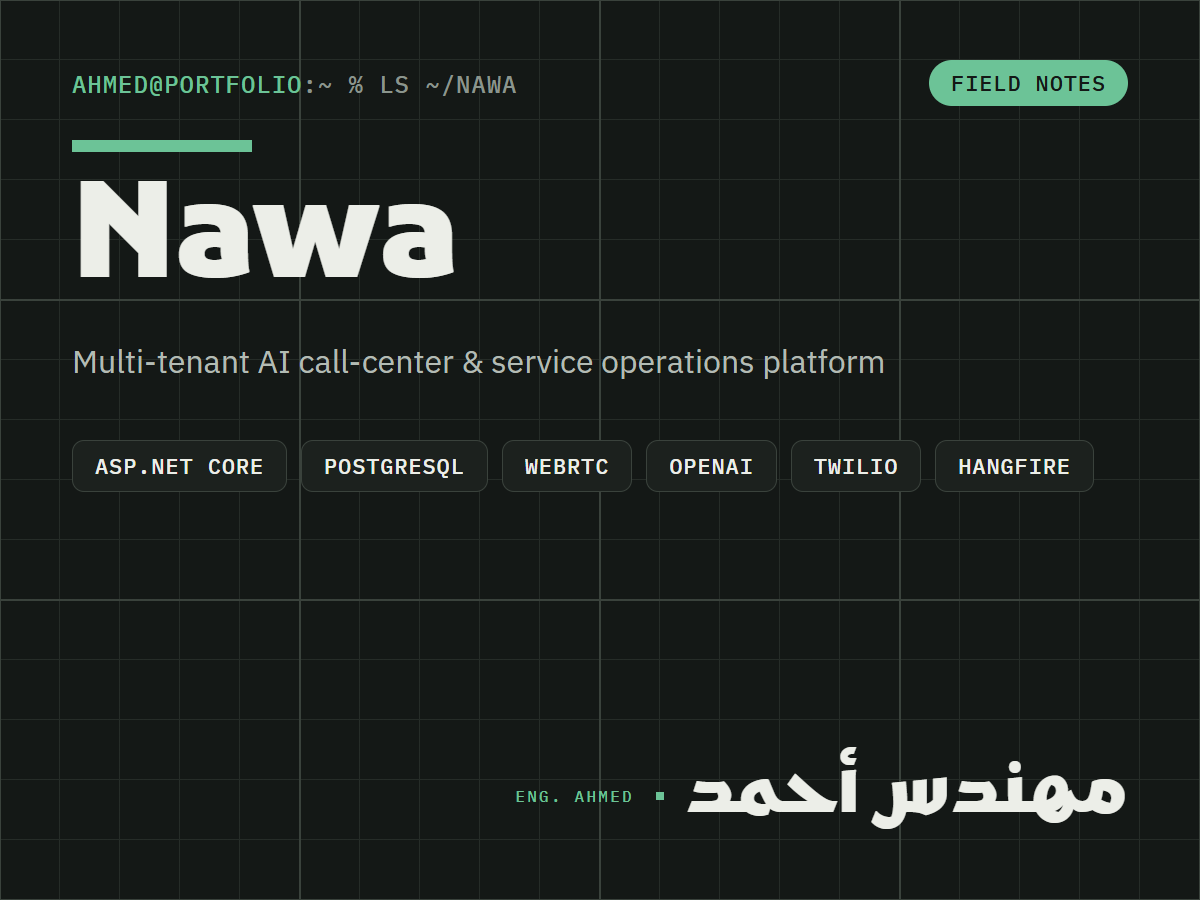
Nawa
Multi-tenant AI call-center and service operations platform: real-time voice and chat over WebRTC and Twilio, policy-driven tool orchestration, billable usage.
AI Operations Platform • Voice & Chat • 2025
Madhmoon
Fintech innovation project for digital inclusion in Iraq, designed, validated and pitched by a multidisciplinary team. First place at the Fintech Hackathon.
Fintech Concept • Fintech Hackathon • 1st Place
NANO
AI-powered OCR web app that extracts and digitizes text from images in real time. First place at the First ITS Hackathon.
AI OCR Web App • First ITS Hackathon • 1st Place
Core Banking
Core banking system concept covering transactional flows and consistency requirements. Second place at the Second ITS Hackathon.
Fintech Concept • Second ITS Hackathon • 2nd Place
Form Builder
A form builder built for usability and rapid, collaborative delivery under hackathon time pressure. Second place at Entrepreneurship Week.
Web App • Entrepreneurship Week • 2nd Place
Experience
Where I learned it.

Want the full story?
The CV has the details: roles, stack, hackathons and education.
Or just email, no pressure
ahmed.emadtarq@gmail.com